FASHION / IMAGINATION / LOÏC PLANET
A Collection That Doesn’t Exist. Yet.
On fashion, imagination and the curious possibilities of artificial intelligence.
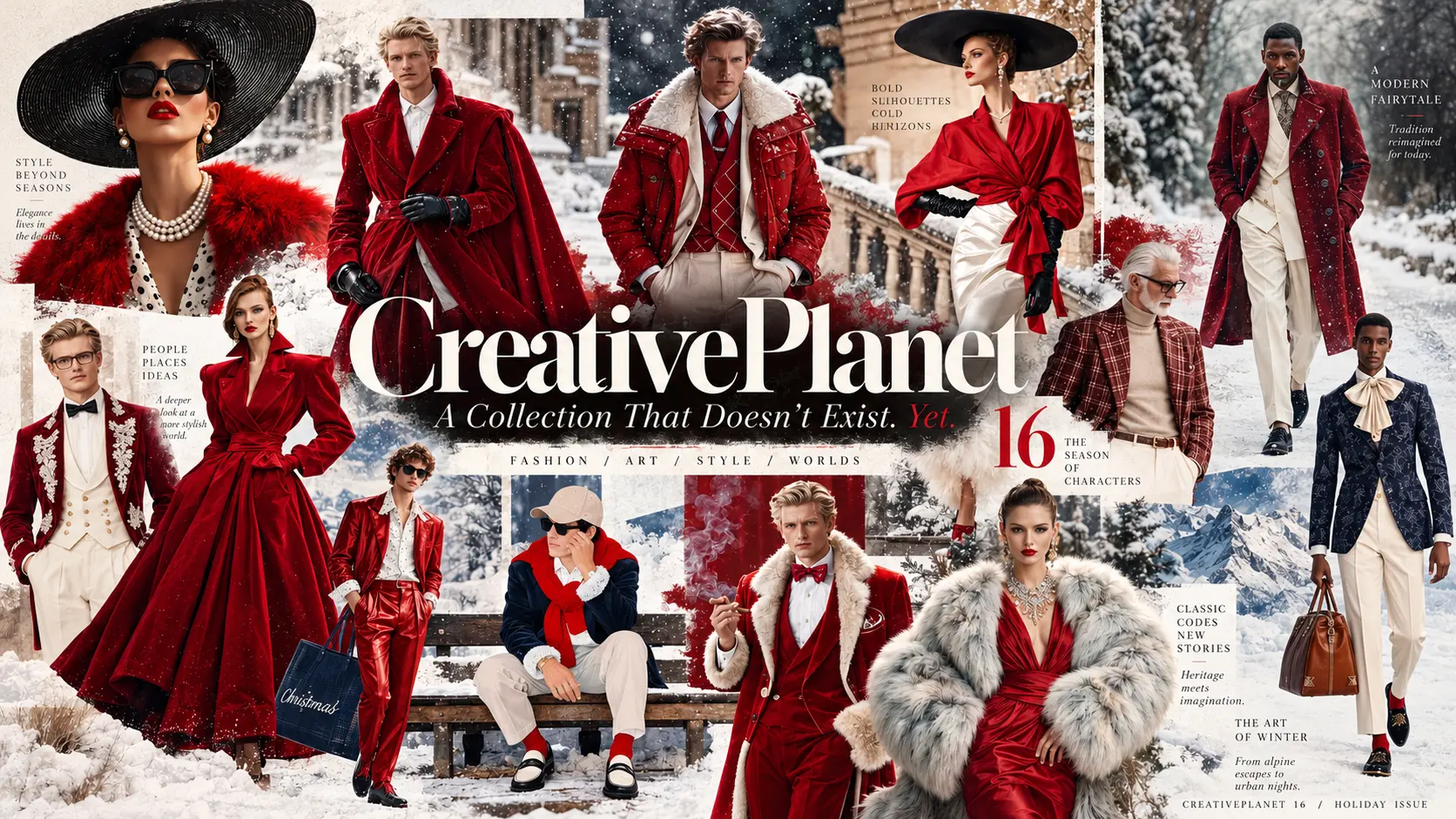
It started with a few drawings.
A red coat, perhaps a little too dramatic for an ordinary Tuesday. White tailoring against a winter landscape. Oversized silhouettes, improbable textures, and characters dressed for somewhere between a fashion show and a rather eccentric Christmas gathering.
I have always been fascinated by fashion. Not simply by clothes, but by what they communicate. How a silhouette can suggest confidence, how a colour can create a character, and how getting dressed allows us to become, even briefly, someone else.
So I started drawing a collection.
There was no atelier, no fabric sourcing, no models waiting backstage. Just an idea, a few sketches and the freedom to imagine without worrying too much about what was technically possible.
Then came a question.
What if I could see these designs beyond the paper?
The collection
FROM DRAWING TO INTERPRETATION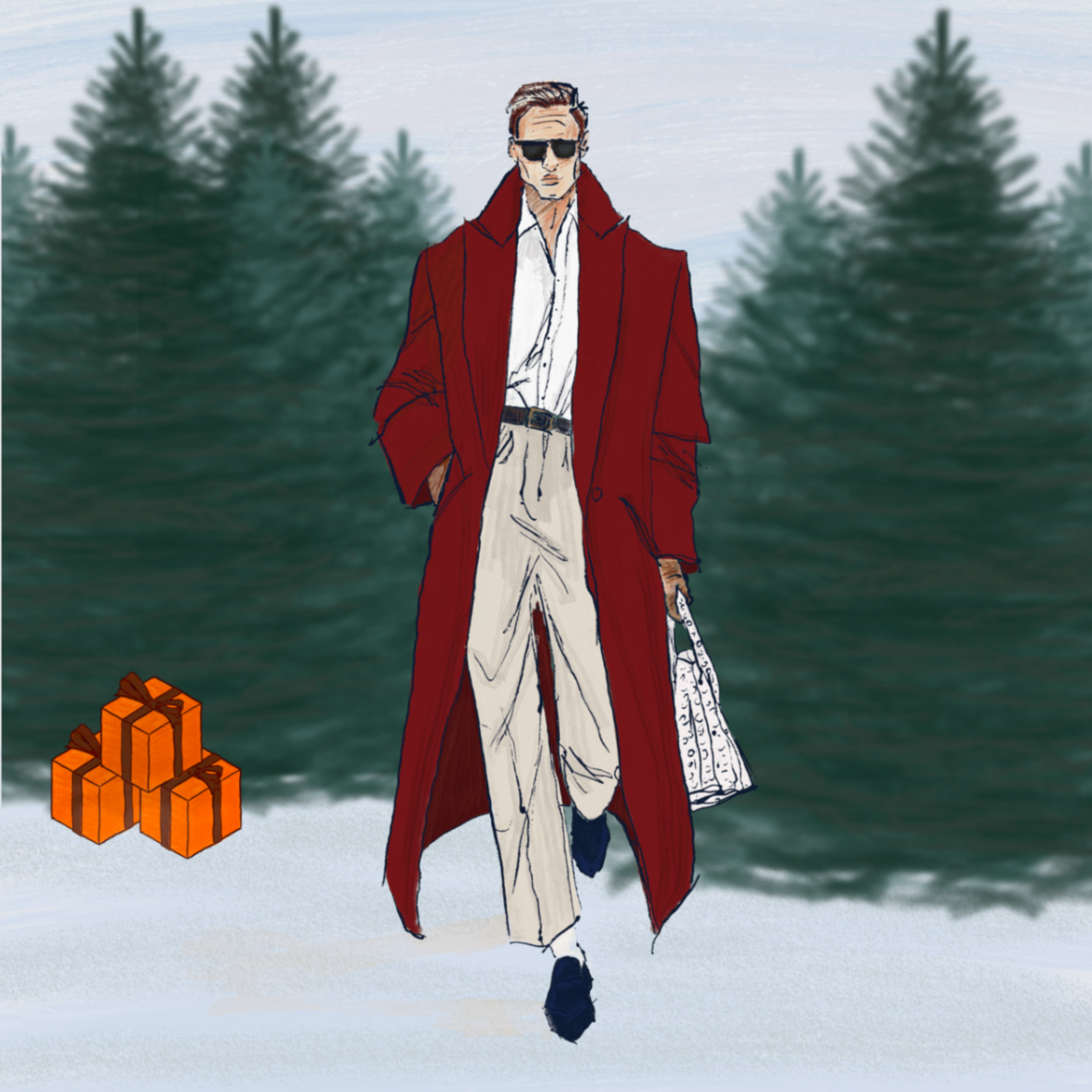
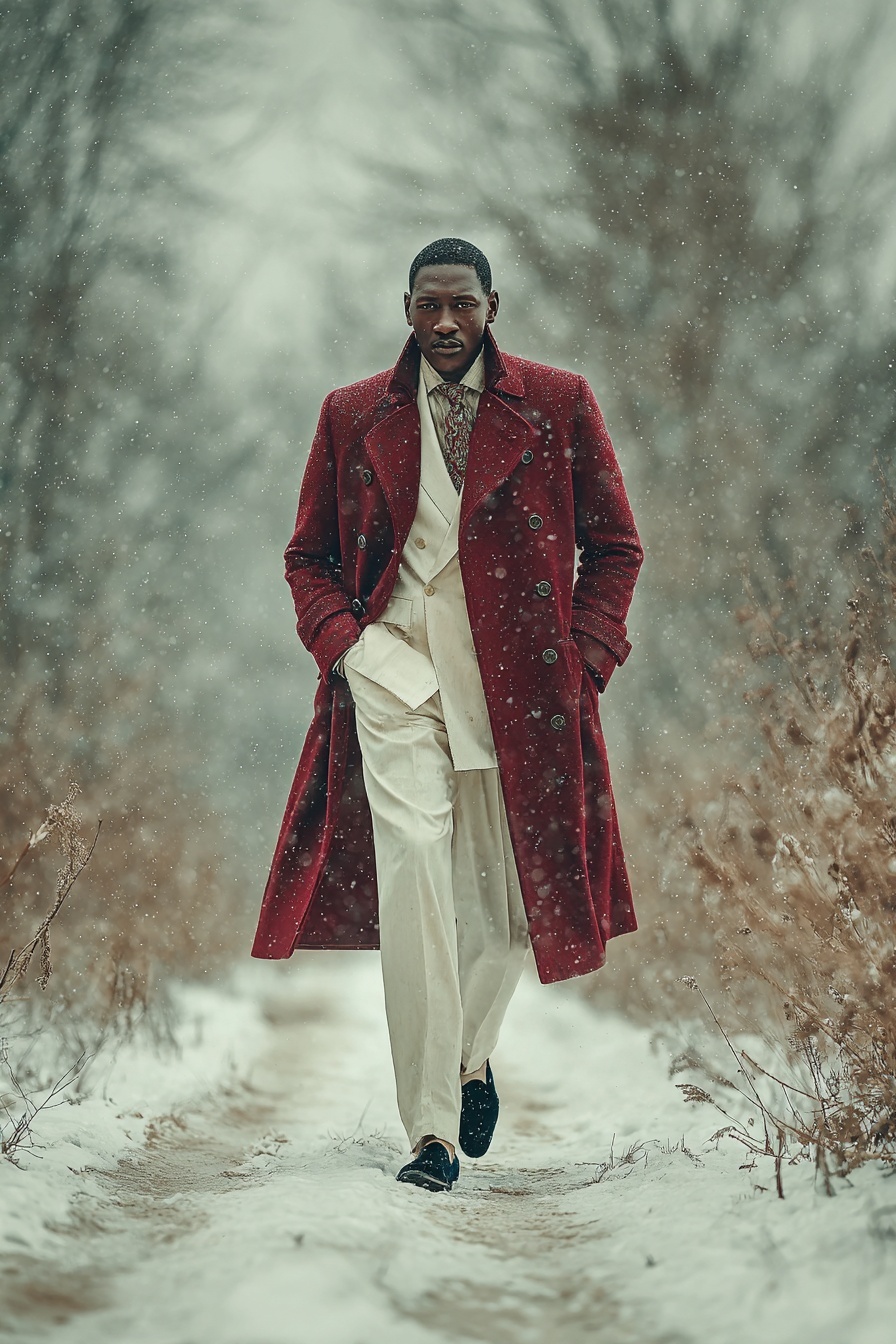
From imagination to interpretation
Artificial intelligence offers an interesting new possibility for creative exploration: the ability to translate an idea into something visually tangible without necessarily having to produce it physically.
For this experiment, I wanted to explore that possibility through fashion.
The drawings establish the creative direction: the silhouettes, proportions, colours, personalities and atmosphere. AI then becomes another medium through which to interpret those decisions, introducing a new layer of realism, texture and visual storytelling.
But translation is never entirely neutral.
A line drawn by hand might suggest the weight of a coat without defining its fabric. A few strokes might indicate movement without specifying how a garment should fall. The moment those suggestions become photographic, decisions have to be made.
Some are intentional. Others are unexpected.
And that is precisely what makes the process interesting.
When the imaginary becomes almost real
Fashion has always existed between imagination and reality.
A designer sketches something that does not yet exist. An atelier interprets it through materials, construction and craftsmanship. A model gives it movement. Photography gives it another life.
AI introduces an additional stage into that journey.
It allows us to explore the visual possibilities of a design before a garment has been made. To experiment with proportions, styling, atmosphere and presentation. To discover whether an idea feels as compelling in a more realistic setting as it did on paper.
But a convincing image is not the same as a finished garment.
It cannot tell us whether the fabric will behave as imagined, whether the construction is possible, or how the piece will feel against the body.
Visualising a design is not the same as making it. And perhaps that distinction matters more than ever.
The value of the imperfect
There is something I particularly enjoy about drawing: its imperfections.
A slightly awkward proportion. A line that doesn’t quite meet another. A texture suggested by a handful of marks.
These details are not necessarily mistakes. They are part of the personality of the work.
AI can introduce extraordinary visual precision, but precision is not always what makes something interesting.
Sometimes the most compelling part of a drawing is precisely what has been left unresolved.
The challenge, then, is not simply to make an image look more realistic. It is to preserve the intention, character and creative decisions that made the original worth exploring.
A new creative dialogue
I work with artificial intelligence and innovation professionally, while drawing and painting remain a much more personal pursuit.
I find the relationship between the two increasingly fascinating.
Technology can expand the ways in which we explore and communicate ideas. Traditional artistic practice reminds us that creativity is also about observation, instinct, experimentation and the pleasure of making something ourselves.
I don’t see these as opposing forces.
Nor do I believe that making something faster necessarily makes it better.
What interests me is how new tools might give us more freedom to experiment, while leaving us responsible for the choices that give the work meaning.
This collection is one small experiment in that relationship.
It began with a drawing. It moved into a digital interpretation. And it may never become a physical garment.
For now, that’s rather the point.
Not everything we imagine needs to exist to be worth creating.
— CreativePlanet, Loïc Planet